IEA Newsbriefs 2026년 5월호 > 기타안내

본문 바로가기

기타안내

회원공간

대한인간공학회는 사회일반의 이익에 공여하기 위하여 인간공학에 관한 학술과 기술을 발전, 보급, 응용하여 인간공학 관련 기술진흥에 공헌함을 목적으로 설립되었습니다.

기타안내

No. 112

IEA Newsbriefs 2026년 5월호

페이지 정보

작성일2026-06-04 작성자작성자 : 최고관리자 조회조회 : 9

본문

2e9e00a9-5c42-4820-809f-96ed8bc95d25.png?rdr=true


NEWSBRIEFS

May 2026


The global IEA community is hard at work organising many exciting events, including conferences and webinars, in 2026. Keep up to date with the latest events and news to ensure that your 2026 is filled with all things HF/E. In this edition, the ‘Announcements’ section shares some exciting HF/E news, including news about IEA Council gatherings, conferences and gatherings as well as IEA2027. The final call for Kingfar and Tsinghua awards are also included, so don’t miss out! The ‘Upcoming Events’ section includes information concerning two webinars in May and several HF/E events and conferences scheduled for 2026. In the Spotlight on IEA Technical Committees feature, we showcase the new Aerospace Human Factors/Ergonomics TC and the important work they are doing to promote human-centred design in Aerospace. As always, we appreciate the ongoing support and commitment of the global IEA community to share updates that will be of interest to our community. Please continue to share news and updates with us newsbriefs@iea.cc.


ANNOUNCEMENTS


2nd IEA Virtual Council gathering of 2026: 7 May

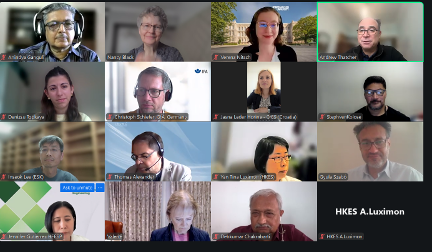
The second Virtual Council Gathering of this year focused on the recent SWOT analysis (strengths - weaknesses - opportunities - threats) of the IEA Executive Committee and the final results of the 2025 Member Survey led by the Professional Standards and Education (PSE) committee, and presented by Verena Nitch, chair of PSE. Attendees discussed how best to ensure IEA Council representatives are prepared for active engagement, and suggestions for improving communication (including potential changes to NewsBriefs format, and language). Council representatives and Sustaining members will receive minutes and links to the recordings for reference.


49a0c006-8254-49c7-a1cb-eb1325b82a9f.png?rdr=true


Screenshot of attendees during 7 May virtual council gathering at 0700 UTC. Second gathering occurred at 1600 UTC.


IEA President at the 67th Japanese Ergonomics Society Conference

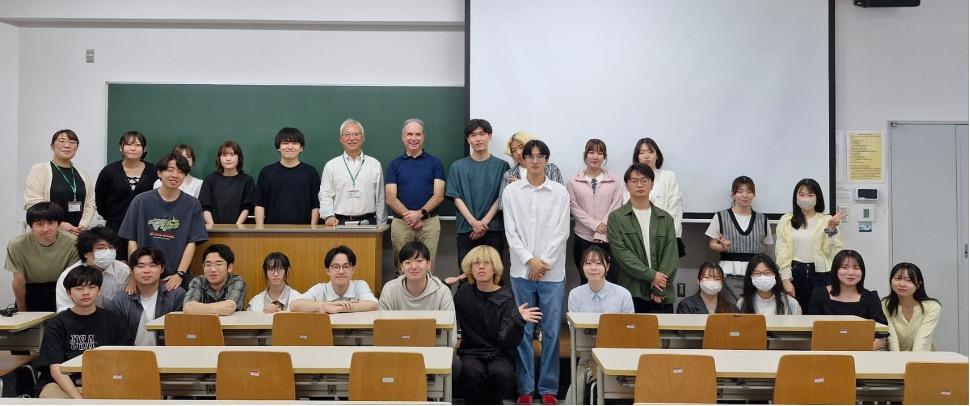
The IEA President was invited to give a keynote presentation at the 67th Japanese Ergonomics Society (JES) Conference which had the theme of "Beyond SDG's". Andrew's presentation was entitled "HFE and the SDGs: promoting health, wellbeing, and effectiveness for Agenda 2050". The IEA would like to thank outgoing JES President Takashi TORIIZAKA for his four years of service leading the society and we welcome Takeshi EBARA (a previous IEA Executive Committee member) as the incoming JES President and wish him all the best for his term. Andrew also gave lectures to student groups at Nihon University outside Tokyo and Nagoya City University.


343d8066-301d-4287-b475-29330b06379d.jpg?rdr=true


IEA President at Nihon University


e28abf8a-6b24-49b7-a43e-df3cb1e7d35b.jpg?rdr=true


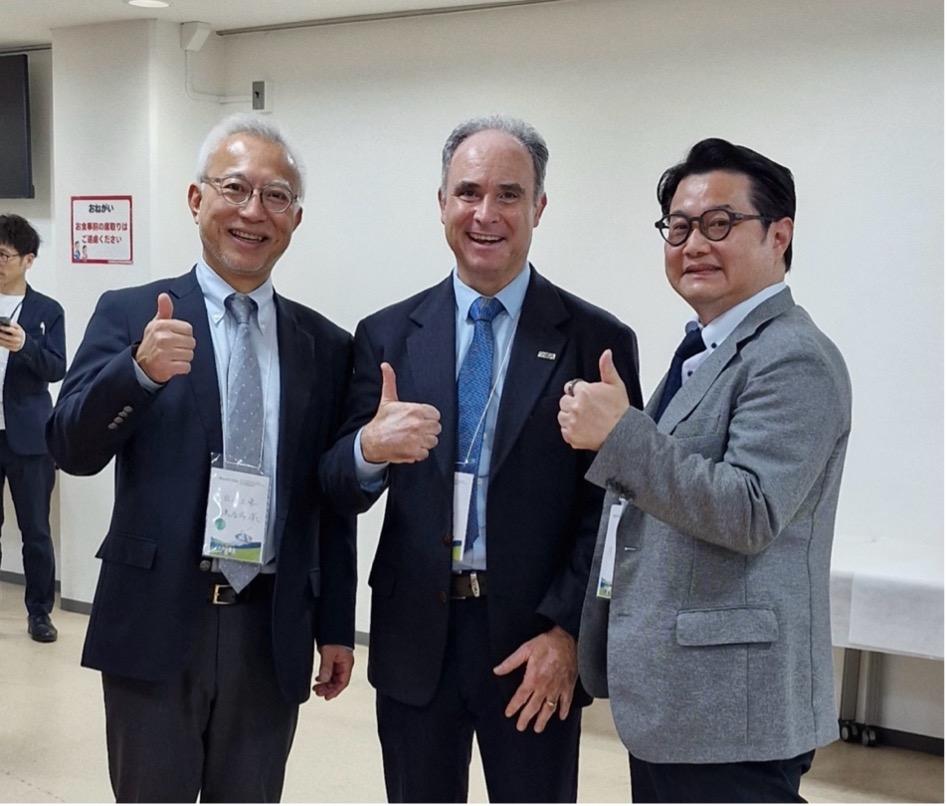
Left to right. Takashi Toriizaka (outgoing JES President); IEA President, Andrew Thatcher;

Takeshi Ebara (incoming JES President)


ILO Ergonomics Hazards Convention

The ILO leadership has voted to accept the background report on ergonomics/human factors led by Carisa Harris (HFES) and to proceed with engagements and discussions towards an international ILO Convention on ergonomics hazards in the workplace for consideration at either the 2029 or 2030 International Labour Conference. The next steps are for the ILO to create a long draft of a Convention in consultation with the IEA and for the ILO to set up a meeting of experts in Geneva in mid-April 2027. The meeting of experts will consist of 8 representatives from governments, 8 representatives from labour, and 8 representatives from industry. The nomination process for the meeting of experts is handled by the ILO but if federated societies have contacts with any of these stakeholder groups that could be encouraged to be nominated as a representative, we would like you to let the IEA Officers know so we can discuss an engagement strategy. The IEA will also have representation at the meeting of experts.


Visit to Cnam in Paris and IEA Archives by IEA Vice-President Secretary General, 30 April

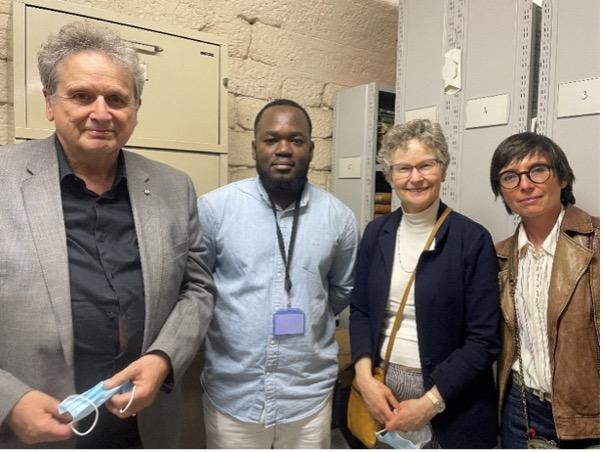
Nancy Black, IEA Vice-President Secretary General visited the 60-year-old Ergonomics team at the Paris offices of Cnam (Conservatoire national des arts et métiers) sharing research advances of this group and IEA updates. With past IEA president Pierre Falzon and current Ergonomics Chair, Catherine Delgoulet, Nancy also visited the IEA archives generously maintained by Cnam.  


8b1f7299-053e-4399-8377-59eb30ad3195.jpg?rdr=true


Professor Emeritus and Past IEA president Pierre Falzon, Cnam archivist Oueton Béranger N’Tcha M’po, IEA VPSG Nancy Black, and Catherine Delgoulet (Cnam Ergonomics Chair and co-responsible of Ergonomics Group) in the Cnam archives housing IEA documents.


a8675cf5-bc00-44dc-8b96-1282d8eebddc.jpg?rdr=true


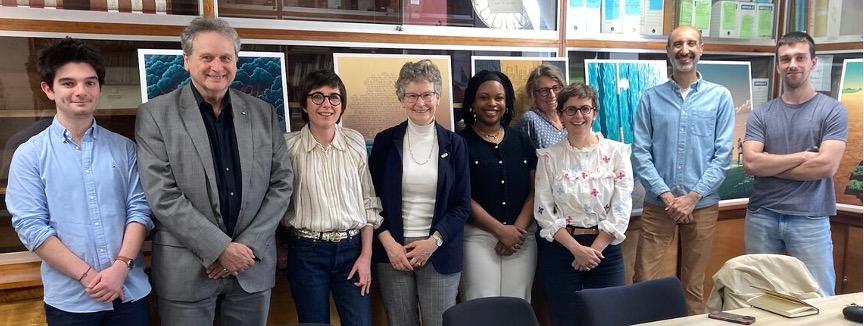
In-person student and professor attendees of the Cnam Ergonomics group meeting with Nancy Black IEA VPSG (4th from left) in Paris, 30 April.


IEA represented at the World Health Assembly (WHA79)

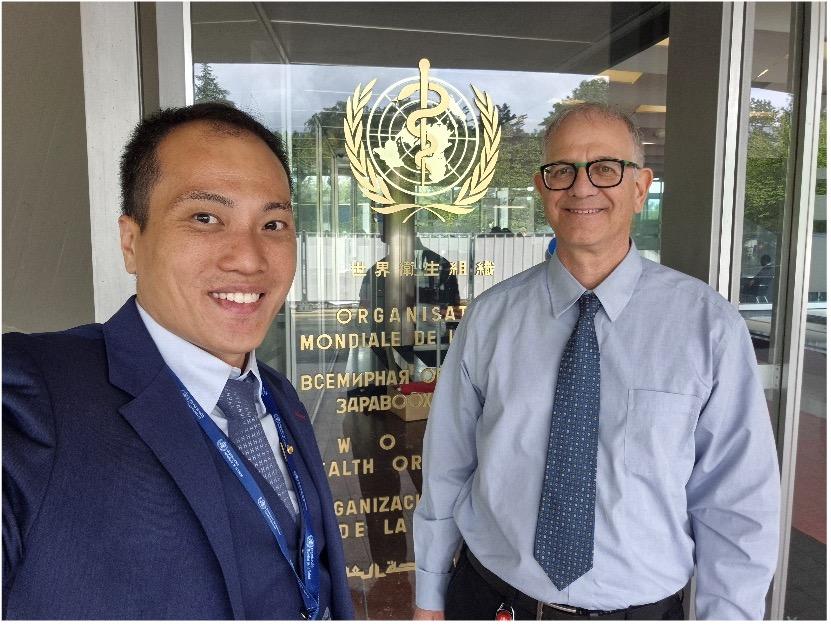
Shanqing (SQ) Yin and Yuval Bitan represented IEA as a Non-State Actor of the World Health Organisation (WHO) at the May 2026 WHA79 meetings. Their participation helps focus future participation by IEA planned for 2027. While in Geneva, SQ and Yuval also met with WHO's Quality of Care & Patient Safety Team advancing discussions relating to the upcoming WHO/IEA Patient Safety guidance document to be published soon and discussed possible opportunities for research collaboration between the WHO and IEA members.


If you are from a Low and/or Middle Income Country (as defined by the World Bank) and are interested in being involved in future WHO–IEA collaborations please contact office@iea.cc or SQ directly.


0a218e7c-2609-46e6-8ed1-c32ef87db121.jpg?rdr=true


The IEA delegation of Shanqing Yin and Yuval Bitan at the front of WHO entrance in Geneva, Switzerland


7a5c5899-da9f-4b3c-8060-9fea5601a503.jpg?rdr=true


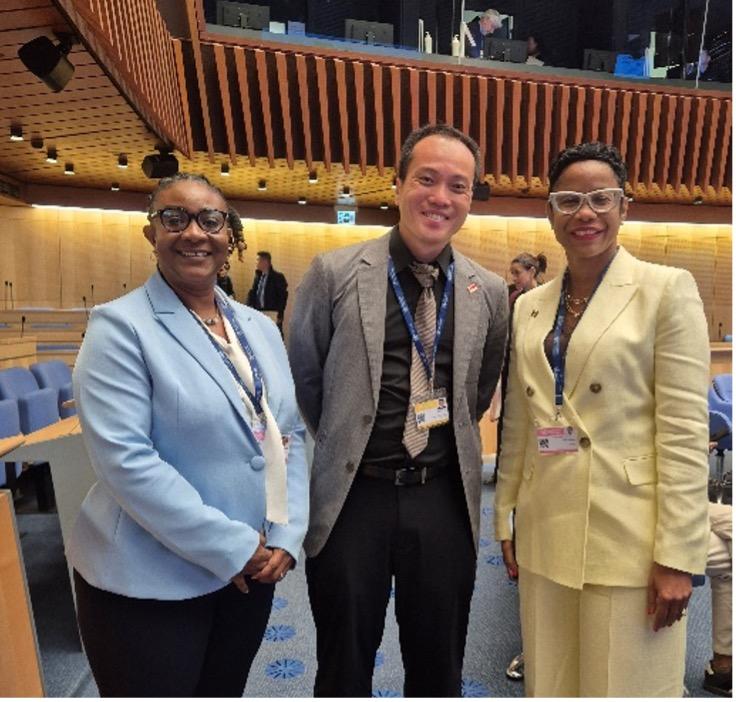
Barbados' Chief Nursing Officer, Annastacia Jordan, IEA representative Shanqing Yin, and Minister of Health & Wellness, Sen. the Hon. Lisa Cummins during WHA79 meeting.


627415c2-60fd-4b05-9c98-dd5c0114f99f.jpg?rdr=true


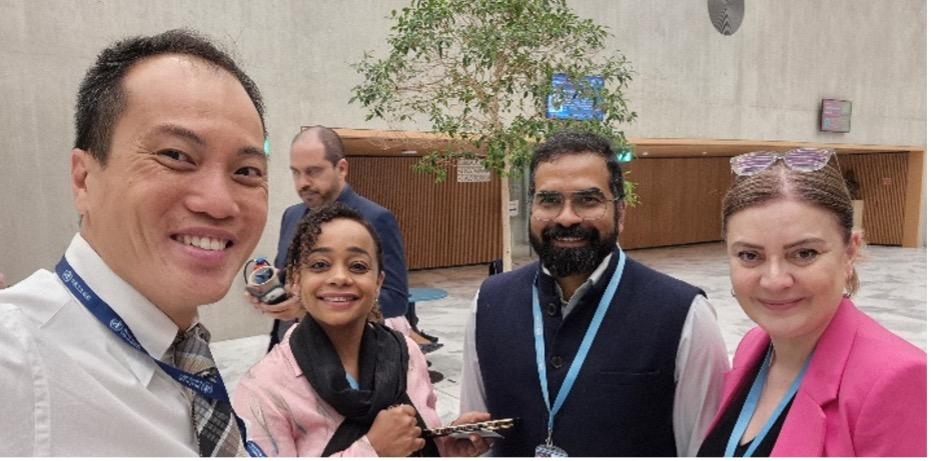
Shanqing Yin with members of the WHO Patient Safety team, Ayda Taha, Nikhil Prakash, and Irina Papieva.


During discussions on Day 1 of the Executive Committee meeting in Nottingham, UK


LAST CALL: IEA/Kingfar Award and IEA/Tsinghua Award 2026 applications now open – Deadline: 30 June, 2026

The IEA/Kingfar Award is given annually to early career professionals to promote and reward high-quality original research and applications on new and emerging HFE issues or issues specifically related to industrially developing countries, as well as to promote a career path in HFE. Nominees can be from any country including both IDCs and developed countries. Up to 13 winners can be recognised each year, with 8 awards given to PhD students, and 5 awards to early career scholars/researchers (within 10 years of completing a PhD). The award amount is $1,000 for each selected student and $1,500 for each selected early career researcher.


The criteria for the IEA/Kingfar award can be found here: https://iea.cc/awards/iea-kingfar-award/


The IEA/Tsinghua Award for Collaborative Human Factors/Ergonomics Education is given annually to honor persons (e.g. researchers, teachers) who, through international and/or inter-regional collaboration, have made significant and outstanding contributions to the success of postgraduate educational programs that include human factors/ergonomics (HFE) courses or substantial HFE content in the curriculum. The intent of this award is to mobilize educators worldwide for HFE education. Up to 4 programs may be awarded. Each program may be represented by up to two nominees. The award consists of a monetary prize of $4,000 per selected program."


More details are available here: https://iea.cc/awards/iea-tsinghua-award/


News group on standardization

1. Context: ISO TC 159/SC 5 and Singapore

ISO/TC 159/SC 5 — Ergonomics of the Physical Environment — is the ISO subcommittee responsible for international standards covering human responses to thermal conditions, noise, vibration, air quality, and visual environments. Secretariat by the British Standards Institution (BSI), under Chairperson Dr Simon Hodder, SC 5, has published 38 ISO standards across four active Working Groups (WG 1 Thermal Environments; WG 4 Integrated Environments; WG 5 Physical Environments for People with Special Requirements; WG 7 Dynamic Signs and Signals). The IEA holds a Category A liaison — the highest tier — with SC 5, enabling IEA-affiliated experts to contribute directly to technical work.

All 38 published SC 5 standards are available for sale in Singapore through the Enterprise Singapore Standards e-shop, complemented by national standards (SS 553:2026, SS 554:2026, SS 657:2020) and the BCA Code on Accessibility 2025. Singapore's training ecosystem offers 42 courses aligned with SC's 5 subject areas, most of which are SkillsFuture-fundable. The three contributors below have played distinct and complementary roles in connecting this global standards framework to Singapore practice.


2. Contributions of Each Individual

Assoc. Professor (Practice) Angela Tan — Singapore University of Social Sciences (SUSS) / Advisor, Human Factors and Ergonomics Society of Singapore

A/P Angela Tan raises awareness of ISO TC 159/SC 5 subject matter within Singapore's university training landscape. At SUSS, she oversees two modules directly mapped to SC 5 standards:

  • HFS201 Workplace Design and Evaluation — covers human factors principles and workspace design; aligned with ISO 11228-1:2021Ergonomics — Manual handling
  • HFS203 Environmental Hazard and Toxicology — covers thermal comfort assessment aligned with ISO 7730:2025 (thermal comfort), ISO 10551:2019, ISO 9921:2003 (speech communication), and ISO 28802:2012.

Through these courses, A/P Tan advances SC 5 knowledge among working professionals and students in Singapore, directly supporting the IEA's mandate to expand the scope of Human Factors/Ergonomics application globally. Her involvement with HFESS further strengthens linkages between the academic community and the practitioner network. IEA President Andrew Thatcher's engagement with HFESS — including two presentations at SUSS (hosted by A/P Angela Tan and KC Yong, HFESS) in October 2025 — reflects the collaborative platform she helps to sustain.


Dr KB Ang — SKC Inc / A/P NUS

Dr. KB Ang contributes to the Singapore standards development process relevant to ISO TC 159/SC 5 through engagement with Enterprise Singapore's national standards program. Singapore national standards SS 593:2013 (Code of Practice for Pollution Control) and SS 554:2026 (Indoor Air Quality) are the principal domestic instruments aligned with the SC 5 thermal and integrated environment standards, and their development involves Technical Committees convened by Enterprise Singapore in which practitioners such as Dr Ang contribute specialist knowledge.

Dr. Ang's background in mechanical and occupational health positions him as a specialist in the physiological and biomechanical dimensions of the physical environment — directly relevant to SC 5 WG 1 work on thermal strain (ISO 9886:2004), metabolic rate (ISO 8996:2021), and heat stress management (ISO 8025:2024). His involvement helps ensure that Singapore's national standards positions and the training content delivered through SKC and NUS reflect current best practice aligned with the international SC 5 framework.


Edwin Yap — Chubb Inc / Human Factors and Ergonomics Society of Singapore (HFESS)

Edwin Yap's contribution operates at the intersection of professional society engagement and standards awareness. As a HFESS representative, he supports the Society's role in connecting Singapore's HF/E practitioner community to the IEA's liaison activities with ISO TC 159, including SC 5. HFESS is the IEA-affiliated federated society for Singapore; through this affiliation, Singapore practitioners — including HFESS members — have access to IEA Technical Committees, webinars, publications, and input channels for ISO standardization work. He also serves on the Technical Committee at Enterprise Singapore, overseeing the development of SS 514 (Code of Practice for Office Ergonomics) and SS 569 (Code of Practice for Manual Handling).

Edwin Yap contributes to awareness-raising activities that help practitioners understand the relevance of SC 5 standards to local professional practice. This includes disseminating knowledge of standards such as ISO 7731:2003 (auditory danger signals), ISO 28803:2012 (accessible physical environments), and the ISO 24500–24504 series in the context of Singapore's workplace safety and accessible built environment frameworks (SS 657:2020; BCA Code on Accessibility 2025).


3. Collective Impact

Dr. Angela Tan (academia and training), Dr. KB Ang (standards development and occupational health practice), and Edwin Yap (professional society engagement and awareness) form a complementary Singapore-based cluster that advances the objectives of IEA's Category A liaison with ISO TC 159/SC 5:

  • Standards development: Contributing to national standards (SS 553:2026, SS 554:2026) that implement SC 5 international standards in Singapore's regulatory and built-environment frameworks.
  • Teaching and capacity-building: Delivering SkillsFuture -eligible university courses (SST102, FMT407 at SUSS) aligned with SC 5 subject areas — thermal comfort, accessible design, environmental quality, and speech communication.
  • Professional awareness: Through HFESS and SKC, disseminating SC 5 standards knowledge to practitioners across workplace safety, occupational health, facilities management, and universal design sectors.

These contributions align with and reinforce the IEA's broader mission: advancing ergonomics and human factors for human well-being and system performance and promoting the SC 5 standards framework across Singapore's training and professional ecosystems.

Sources: IEA Involvement in ISO/TC 159/SC 5 (May 2026); ISO TC159/SC5 Singapore Standards & Training Courses Mapping (May 2026); IEA EinDfA TC Newsletter No. 4/2017; IEA NewsBriefs October 2025; ISO.org (TC 159/SC 5); SUSS Course Catalogue; Enterprise Singapore Standards e-shop.


Updates about IEA2027!

Next year's IEA Congress will be held at Excel London. Its world-class facilities, its location in the heart of the historic Royal Docks and its public transport connections make it the perfect venue for this international celebration of ergonomics and human factors.


The call for submissions opens on 1 July and we'll be inviting research papers, practitioner case studies, workshop proposals and student projects. The over-arching theme of The Human Advantage is a call to action to reclaim intentional, human-led thinking as a strategic strength, enabling design centred around human characteristics, needs and behaviour. 


Tickets are available now with accommodation options following on. Three full days of Congress gives you the opportunity to hear and share insights across multiple sectors, to meet up with colleagues and make new connections, and to leave feeling inspired about what the future holds for our profession. A purpose-built conference app will make planning and preparation easy, enabling you to concentrate on making the most of your time and enjoying the whole experience.


For all details, visit https://iea2027.com


5557868a-47b0-434b-b805-016db477c97d.png?rdr=true


Some important dates for this event:

Launch of updated website (iea2027.com) & Registration opens: 29 April 2026

Call for papers opens: 1 July 2026


Be the first to hear news about the congress! Start by scanning the QR code:


ba3a74b2-fa70-4470-83b9-e61cbd276f47.png?rdr=true


We can’t wait to welcome everyone to London for this event!


WEBINARS 


What the Frontline Thinks About the Technology for MSD Prevention — and Why It Matters, 8 June 2026, 1500 UTC

As organizations accelerate the adoption of emerging technologies to prevent musculoskeletal disorders (MSDs), safety and operations leaders are often driving these investments. However, frontline worker perspectives—critical to adoption, sustained use, and measurable impact—are not always well understood. This presentation shares insights from a survey of 405 frontline workers with direct experience using MSD prevention technologies, including wearable sensors, computer vision systems, robots and cobots, exoskeletons, extended/virtual/augmented reality, and digital twins. Findings highlight how workers perceive these technologies’ impact on physical comfort, cognitive demands, and job satisfaction—factors that directly influence effectiveness, compliance, and return on investment.


Presenter: Dr. Rammohan (Ram) Maikala, SME-Program Technical Consultant, MSD Solutions Lab, National Safety Council


Webinar Chairs:

Dr. Xu Xu | The Edward P. Fitts Department of Industrial and Systems Engineering, North Carolina State University, USA | IEA MSD TC Chair |

Dr. Erwin Speklé, Eur.Erg. | Arbo Unie OHS / Amsterdam UMC – Vrije Universiteit Amsterdam, Dep. POH, The Netherlands | IEA MSD TC Vice-Chair |


Zoom link for registration: https://us02web.zoom.us/webinar/register/WN_FZi6MpHZTz60E7aCLqnmJA


Past recorded IEA webinars can be found here:

https://www.youtube.com/channel/UCDnjCjRcYB7rBR2PJFw6k6w


UPCOMING EVENTS


The 15th International Symposium on Human Factors/Ergonomics in Organizational Design and Management (ODAM), 8 – 10 June, 2026, University of Connecticut 

The 15th International Symposium on Human Factors/Ergonomics in Organizational Design and Management (ODAM), sponsored by the IEA Organizational Design and Management Technical Committee and the HFES Macroergonomics Technical Group, will take place from 8 – 10 June 2026, at the University of Connecticut, Storrs campus. The conference theme is "Innovating for the Future: Human-Centered Organizational Design in the Age of Emerging Technologies and Evolving Work." ODAM 2026 is breaking boundaries with a two-campus global experience: We’re reimagining what it means to host a truly global symposium. ODAM 2026 will feature an innovative two-campus format, (University of Connecticut and Technical University of Denmark), bringing participants together in person. A Special Issue of Ergonomics is being planned. Full proceeding papers will be considered for submitting a manuscript for the special issue in Ergonomics.


For more information, please see the conference website: https://uconnuecs.cventevents.com/event/0b6e69d6-52c9-4a73-bf0c-86a7e4617973/summary


The Slips, Trips and Falls International Conference (STF2026), 18-19 June 2026, Huntsville, Alabama, USA

Mark your calendars and save the dates for this conference on slips, trips and falls taking place in Huntsville, Alabama in June 2026.


For more information, please visit the conference website: https://w3.tohoku.ac.jp/stftc/category/news/


37th Summer University on Ergonomics: Human Factors, AI and Monitoring in Ergonomics and Safety, 1–3 July 2026, Budapest, Hungary

This year’s Summer University, held at Óbuda University focuses on the changing role of ergonomics and human factors in the age of artificial intelligence, human monitoring, digital technologies, safety science and workplace applications.


For more information, please visit the Summer University website:

https://met.ergonomiavilaga.hu/wp/2026/03/01/37th-summer-university-on-ergonomics/


The 10th International Digital Human Modelling Symposium, 1-3 July 2026, Maribor, Slovenia

The International Digital Human Modelling Symposium organised by the Faculty of Mechanical Engineering at the University of Maribor will be taking place from the 1st to the 3rd of July 2026 at the University of Maribor in Slovenia. 


For more information, please visit the conference website: https://dhm2026.fs.um.si/


11th International Ergonomics Conference, Ergonomics 2026, 1-3 October 2026, Dubrovnik, Croatia

The 11th International Ergonomics Conference – Ergonomics 2026 will take place from 1st – 3rd October 2026 in Dubrovnik, Croatia, at the Dormitorij venue. The conference is organized by the Croatian Ergonomics Society and will bring together researchers and professionals in ergonomics from around the world to exchange knowledge, present scientific findings, and discuss contemporary challenges in human-centred design and work systems. Through its mission of promoting ergonomic practice, education, and research, as well as strengthening international cooperation within the global ergonomics community, the conference aims to encourage interdisciplinary dialogue and support the development of safer, healthier, and more sustainable working and living environments. More information is available at the Croatian Ergonomics Society website: https://h-e-d.hr/conferences/


Submission deadline for abstracts: 30 June 2026


Conference fees:

Early bird before 15th July 2026: 600,00 €

Full amount: 700,00 €

Student's paper: 400,00 €


Nordic Human Factors and Ergonomics Society (NES) 21-23 October 2026 in Jönköping, Sweden

This conference’s theme is “Revitalizing Nordic Ergonomics for the Future”.


Key dates are:


  • Deadline for submissions: 30 April 2026
  • Notification of review outcome: 29 May 2026
  • Deadline for revised submissions: 30 June 2026


For more information, please visit the conference website: https://nes2026.org


1st International Conference on Informal Work: Health, Safety and Well-being. 9-11 November 2026, Cali, Colombia

This First International Conference on Informal Work, themed ‘Health, Safety and Wellbeing of Workers’, seeks to generate a space for dialogue and reflection to better understand the reality of informal work globally, exchange experiences, and propose innovative methods for improving the health, safety, and wellbeing of informal workers.

This three-day in-person conference aims to bring together academic, institutional, community and worker perspectives to reflect, discuss, and share experiences regarding the multifaceted realities of informal labour. From an interdisciplinary and global standpoint, the conference will address the implications for health, safety, wellbeing, labour conditions, and social protection.

The conference will summon researchers, policy makers, labour organizations, civil society, public institutions, occupational health and safety practitioners, ergonomics specialists, professional societies in the health sector, and community actors interested in analyzing and debating occupational health and safety for the informal sector, and the transformations of informal work within rural, urban, and new digital technologies contexts.


The Conference will be organized and hosted by the School of Public Health at Universidad del Valle in Santiago de Cali, Colombia, and co-organized by the Global Coalition on Informal Workers’ Health, Safety, and Wellbeing (GCIW), with endorsement from the International Ergonomics Association (IEA), the International Commission on Occupational Health (ICOH), Scientific Committee on Occupational Health in Small-Scale Enterprises and the Informal Sector (SC OHSSEIS), the International Occupational Hygiene Association (IOHA) and in collaboration with other academic networks and national and international organizations including the Sociedad Colombiana de Ergonomía (SCE), the International Labor Organization (ILO), International Social Security Association (ISSA), and Women in Informal Employment Globalizing & Organizing (WIEGO).


More information to come!


Human Factors and Ergonomics Society of Australia (HFESA) 30 Nov – 2 Dec 2026, Sydney, Australia

The Human Factors and Ergonomics Society of Australia (HFESA) is accepting abstracts for their 2026 conference, to be held 30th Nov – 2nd Dec at the Mercure Sydney hotel. Researchers or practitioners in any work sector or domain of HFE (i.e. physical, cognitive, organisational) are welcome to submit an abstract to be part of HFESA26. Guidance on submitting an abstract for a research presentation, industry presentation, lightening talk or workshop is available here: 

https://www.ergonomics.org.au/conf1/  


Submissions close on 15 May 2026 (midnight AEST).

Early Bird Registration is available until 30 September 2026.


Humanizing Work and Work Environments 2026 (HWWE 2026) of ISE, 9-11 December 2026, Dehradun, Uttarakhand, India

HWWE 2026 will be hosted by the University of Petroleum and Energy Studies (UPES) in Dehradun, Uttarakhand, India. The annual conference of the Indian Society of Ergonomics, envisions a future where work environments are designed to maximize well-being, safety, and efficiency. The conference aims to serve as a catalyst for transformative ideas, fostering a world in which ergonomics is seamlessly integrated with emerging technologies and sustainable practices. For more information visit: https://www.ise.org.in/hwwe.shtml


SPOTLIGHT ON IEA TECHNICAL COMMITTEES (TC)


After featuring the Maritime Human Factors/Ergonomics TC in our previous issue, in this edition, we turn our focus to the Aerospace Human Factors and Ergonomics Technical Committee. The Aerospace Human Factors and Ergonomics Technical Committee is a scientific and technical committee of the International Ergonomics Association (IEA). The formation of the TC is endorsed by the IEA at its Annual Council Meeting. Its mission is to promote the development of Human-Centred Design in aerospace, and the application of derived knowledge, methods and tools for the betterment of research, educational and professional services. In particular, it focuses on aviation and space systems, including aircraft and spacecraft design, and the activities of system development, operations (whether on the ground or in air or space), maintenance, regulation and training.


Objectives of the TC:

The goals or objectives of the Aerospace Human Factors and Ergonomics Technical Committee are the following: help address various scientific and technical issues within aerospace, cooperate across disciplines to advance the state-of-the-art of knowledge and applications, and to set standards for society and industry use. A main goal is to rationalize what is currently done in the world in aeronautics and space with respect to human factors and ergonomics (HF/E). Air and space are special domains where human beings have special relations with appropriate machines. Human-machine interaction in aerospace systems relates to safety, performance and comfort. HFE should then be analyzed with respect to these three dimensions. The Aerospace Human Factors and Ergonomics Technical Committee aims to establish a basis for incorporating human factors and creativity throughout the aerospace life cycle. Human-centred designers are involved from the beginning of the life cycle of a system to its decommissioning. This poses two challenges for our community: (1) getting the broader engineering design communities to include us more substantially in all stages of design; and (2) in our own community, figuring out what we would do with such an opportunity, since the dominance of our methods focuses not only on evaluation but also on creativity, as synthesis and integration.


If you wish to join the Technical Committee Please Click On This Link


TECHNICAL COMMITTEES (TCs):


The IEA’s Technical Committees (TCs) are ad-hoc special interest groups that are formed as a platform to exchange up-to-date information on and discuss a particular HFE field. More information is available at: https://iea.cc/leadership/technical-committees/


TC Creation

If you, with at least 5 colleagues, share a passion for a particular special interest area which does not exist as a Technical Committee (TC) and you wish to create a new TC, please contact stpchair@ iea.cc for formalizing this. The process is easy and free!


TECHNICAL COMMITTEES (TCs) SIGN UP SHEET


The IEA Technical Committees (TCs) are seeking to expand their membership and invite new members from federated societies. To facilitate this, we have created a sign-up form that provides an overview of the role of Technical Committees, including their four primary functions. By completing the form, you can express your interest in joining up to two TCs. Once submitted, TC administrators will review your submission and reach out for further details.

Sign-up form for Technical Committees: https://forms.gle/mMpZ9V9PhBGHPBHQ6


Joining a TC is free and there are no qualifying criteria (just that you are a member of a federated society) to join and to participate. You can also join more than one TC if your interests are broader. A list of the TCs can be found on the IEA’s website: 

https://iea.cc/leadership/technical-committees/.


You are always welcome to reach out to TC chairs in addition.


0ae00071-e767-4ed5-a41f-c3445638d7b9.png?rdr=true


S.gif


(사)대한인간공학회사업자등록번호 : 209-82-04628대표자 : 정홍인 (06132) 서울특별시 강남구 테헤란로 25길 20, 614호 (역삼동, 역삼현대벤쳐텔) Tel. 02-568-2995Fax. 02-6455-2994Email. admin@esk.or.kr

© The Human Factors & Ergonomics Society of Korea (ESK). All right reserved

-Ergonomics Society of Korea 상단으로
이용약관대한인간공학회 회원가입 약관
확인
개인정보 처리방침개인정보 처리방침
확인
이메일 무단 수집거부이메일 무단수집 거부
확인