IEA Newsbriefs 2026년 3월호 > 기타안내

본문 바로가기

기타안내

회원공간

대한인간공학회는 사회일반의 이익에 공여하기 위하여 인간공학에 관한 학술과 기술을 발전, 보급, 응용하여 인간공학 관련 기술진흥에 공헌함을 목적으로 설립되었습니다.

기타안내

No. 110

IEA Newsbriefs 2026년 3월호

페이지 정보

작성일2026-04-10 작성자작성자 : 최고관리자 조회조회 : 15

본문

2e9e00a9-5c42-4820-809f-96ed8bc95d25.png?rdr=true


NEWSBRIEFS

March 2026


The global IEA community is hard at work organising many exciting events, including conferences and webinars, in 2026. Keep up to date with the latest events and news to ensure that your 2026 is filled with all things HFE. In this edition, the ‘Announcements’ section shares some exciting HFE news. The ‘Upcoming Events’ section includes information on several HFE events and conferences scheduled for 2026. In the Spotlight on IEA Technical Committees feature, we showcase the new AI and Work TC and the important work they are doing to promote the well-being, safety and autonomy in AI-enabled workplaces. As always, we appreciate the ongoing support and commitment of the global IEA community to share updates that will be of interest to our community. Please continue to share news and updates with us newsbriefs@iea.cc.


ANNOUNCEMENTS


Update on the Virtual Council Gathering on 5 March 2026

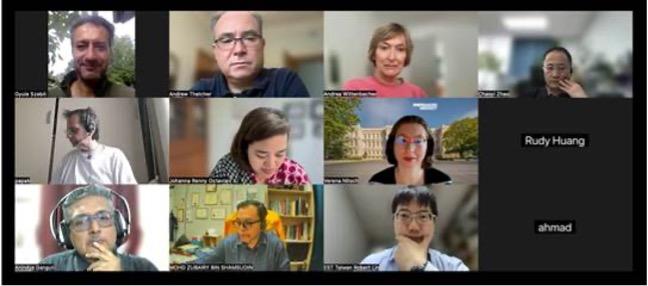
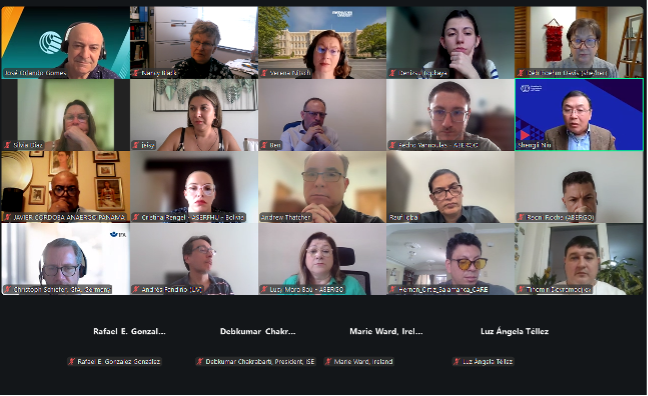
On 5 March 2026 IEA held a new virtual council gathering with two 90-minute sessions. 


Thirteen people attended the first session at 0700 UTC, and 24 people attended the second session at 1600 UTC. During both sessions, Dr Shengli Niu of the International Labour Organization (ILO) Occupational Safety and Health and Working Environment Branch presented on ILO’s work and collaboration with IEA on HFE matters. The ILO recognises that Musculoskeletal disorders (MSDs) account for 40% of the overall costs of work-related injuries and diseases. While currently MSDs are not recognized as causing any deaths, they are a very important source of disability-adjusted life years (DALYS). ILO’s normative work on Occupational Safety and Health includes a new convention on “ergonomics and manual handling”, with potential adoption in 2030. To support this, the IEA’s international technical expert team submitted their first document to the ILO at the end of 2025; this will support the creation of guidelines for the planned ILO global strategy on Occupational Safety and Health, including Ergonomics and Human Factors, with several more steps required before adoption. 


Screenshots of attendees from the 0700 and 1600 gatherings and of Shengli’s presentation follow:


ebf2bf41-1d34-403e-9d9b-afef81576a7a.jpg?rdr=true


be28dd1d-c8e1-4968-9e03-7efc12d315fa.png?rdr=true


The next IEA Virtual Council Gatherings will take place on the 7th of May and the 27th of August. IEA council and sustaining member representatives are welcome to attend. 


Open call for editorial leadership and service: IISE Transactions on Occupational Ergonomics and Human Factors

IISE Transactions on Occupational Ergonomics and Human Factors invites applications and nominations for three key roles supporting the journal’s growth, rigour, and impact. These roles include Associate Editors (AEs), Editorial Board (EB) Members, and Advisory Panel Members (Practitioner Review Panel).


More information regarding the application process, including eligibility requirements and desired qualifications, can be found here: https://sgp1017.siteground.asia/webmail/roundcube/?_task=mail&_frame=1&_mbox=INBOX&_uid=353&_part=2&_action=get&_extwin=1#


IEA/Kingfar Award and IEA/Tsinghua Award 2026 applications now open – Deadline: 30 June, 2026

The IEA/Kingfar Award is given annually to early career professionals to promote and reward high-quality original research and applications on new and emerging HFE issues or issues specifically related to industrially developing countries, as well as to promote a career path in HFE. Nominees can be from any country including both IDCs and developed countries. Up to 13 winners can be recognised each year, with 8 awards given to PhD students, and 5 awards to early career scholars/researchers (within 10 years of completing a PhD). The award amount is $1,000 for each selected student and $1,500 for each selected early career researcher.


The criteria for the IEA/Kingfar award can be found here: https://iea.cc/awards/iea-kingfar-award/


The IEA/Tsinghua Award for Collaborative Human Factors/Ergonomics Education is given annually to honor persons (e.g. researchers, teachers) who, through international and/or inter-regional collaboration, have made significant and outstanding contributions to the success of postgraduate educational programs that include human factors/ergonomics (HFE) courses or substantial HFE content in the curriculum. The intent of this award is to mobilize educators worldwide for HFE education. Up to 4 programs may be awarded. Each program may be represented by up to two nominees. The award consists of a monetary prize of $4,000 per selected program."


More details are available here: https://iea.cc/awards/iea-tsinghua-award/


FINAL CALL: IEA Fellow Award Applications Deadline 30 April 2026

The call for nominations for the 2026 IEA Fellow Awards is currently open. The IEA Fellow Award is given to recognize extraordinary or sustained, superior accomplishments of an individual. To be considered for the IEA Fellow Award, the candidate must have been a Full Member in good standing of a Federated or Affiliated Ergonomics Society for at least the preceding 10 years, and the candidate must have served the ergonomics community at an international level. In addition, the candidate's distinction as a Human Factors/Ergonomics professional must be demonstrated. Please nominate deserving colleagues by 30 April 2026. Download the application here: https://iea.cc/awards/fellowship-of-the-iea/


News from Group on Standardization – TC159/SC4 part-2

AGS continues news from ISO TC159/SC4 (Subcommittee 4: Human-System Interaction). SC4 focuses standardization of ergonomics/human factors, in particular the interaction between and within systems and people. This month, recent activities of SC4/WG3, WG5, WG6 and WG8 are reported.


1) Working Group 3 “Controls, workplace and Environmental requirements”

Scope: The standardisation of the ergonomics/human factors of human-system interaction, to prepare standards concerning terminology, generic principles related to physical input devices and their dedicated software, human postures, workplaces and physical use environments as part of the context of use, and to prepare documents relevant to these principles.

Convener: Dr. Levent Caglar (Tentative, for one year)

Secretary: Ms. Kim Schulze

Current main topics:

ISO/DTR 9241-520: Ergonomics of human-system interaction — Part 520: Ergonomics aspect of activity-based working (ABW)

ISO 9241-510: Guidance on physical design of the immediate environment (for designers and end users) (in progress)

ISO 9241-501: Ergonomic process for office work and layout (in progress)

ISO/WD 9241-5xx: Ergonomics of human-system interaction – Part 5xx: Ergonomics requirements for Activity Based working (ABW)


2) Working Group 5 “Interaction and presentation of information”

Scope: The standardization of ergonomics/human factors for human-system interaction and presentation of information across modalities and under appropriate control of software.

Convener: Mr. Thomas Geis

Secretary: Batbayar Ganbaatar (DIN Deutsches Institut fur Normung), Germany

Current main topics:

ISO/PWI 9241-141 (2nd edition): Ergonomics of human-system interaction – Part 141: Menu interaction (working title)

ISO/FDIS 9241-130 (1st edition): Ergonomics of human-system interaction – Part 130: User assistance within interactive systems

ISO/FDIS 9241-161 (2nd edition): Ergonomics of human-system interaction – Part 161: Guidance on visual user-interface elements

ISO/FDIS 9241-171 (2nd edition): Ergonomics of human-system interaction – Part 171: Guidance on software accessibility


3) Working Group 6 “Human-centred design processes for interactive systems”

Scope: The standardization of the ergonomics/human factors of human-system interaction in the design, evaluation and use of interactive systems. Interactive systems are the combination of hardware and/or software and/or services and/or people that users interact with in order to achieve specific goals. Stakeholders include the people who use, operate, and are affected by interactive systems, as well as those who specify, develop, manufacture, evaluate, procure, install and maintain them. Standards address the principles and activities of Human-Centred Design (HCD), involvement of users/stakeholders, HCD processes, methods for HCD, usability engineering, accessibility, process capability, and the support and application of ISO 9241.

Convener: Dr. Jonathan Earthy

Secretary: BSI (British Standards Institution), UK

Current main topics:

ISO 9241-222 Self-assessment of human-centred approach

ISO 9241-812 Guidance on artificial intelligence systems

ISO 9241-250 The application of 38500 to the governance of a Human-Centred approach

ISO TS 18152 Specification for the process assessment of human-system issues. This revision is being done in liaison with IEA and INCOSE human-system integration groups.


4) Working Group 8 “Ergonomic design of control centres”

Scope: The standardization of the ergonomics/human factors of human-system interaction in the design of terrestrial control rooms. Included are ergonomic requirements concerning human system interfaces, control room equipment, the working environment and relevant architectural considerations. The standards developed by WG8 cover all domains including transportation, emergency services, utilities and the critical infrastructure. The standards build on, and extend, the foundation presented by the ISO 9241 series but focus on the special requirements associated with control rooms. The audience for the standards developed by WG8 covers a range of professionals including architects, software engineers, interface designers and ergonomists.

Convener: Mr. John Wood, UK

Secretary: BSI (British Standards Institution), UK

Current main topics:

ISO 11064-3: Control room layout

ISO 11064-4: Workstation layout and dimensions


Exciting news about IEA2027!

The Chartered Institute Ergonomics and Human Factors is excited to share the venue for IEA2027 in London. The next IEA Congress will take place at Excel London from the 23rd to the 25th of August 2027. We are excited to share some important dates for this event:


Bookings open on 29 April 2026

Call for papers opens on 1 July 2026


Be the first to hear news about the congress! Start by scanning the QR code:


ba3a74b2-fa70-4470-83b9-e61cbd276f47.png?rdr=true


We can’t wait to welcome everyone to London for this event!


Proceedings of the 22nd Congress of the International Ergonomics Association,

Volume 1 - 6 

Access to the Proceedings of the 22nd Congress of the International Ergonomics Association is now granted via the conference website: 

https://www.iea2024.com/submission/07.html?sMenu=07 


IEA2024 participants are now entitled to get full free access to all 6 titles via the IEA conference website. The free access is granted until the end of April 2026 (30th April 2026). 


Useful guidelines in case of access/authentication problems: 

  • Sometimes, individual computer settings (firewall, etc.) prevent the correct forwarding and recognition on Springer Nature Link. If this is the case, please try to access the proceedings from your personal computer instead of your business computer or use another internet browser.
  • You may have access problems if you have installed anti-virus software (for example, NORTON / AVIRA / KASPERSKY / SYMANTEC) on your computer; your anti-virus software blocks the communication. To overcome this anti-virus software problem, disable the HTTP referrer blocker for the conference website https://www.iea2024.com/.... and Springer Nature Link https://link.springer.com......   
  • Please be informed that the IP recognition is always active on Springer Nature Link https://link.springer.com and suppresses any other logins. If access within your corporate network (university/institution/clinic) is problematic, please try accessing the website instead from outside that corporate network (via your private computer, laptop, netbook, or smartphone).

It is also helpful to clear your cache and deleting set cookies. 


When you follow these steps, then the access will be automatically granted to you.


Passing of Margaret Irene Bullock, IEA Executive Committee trailblazer

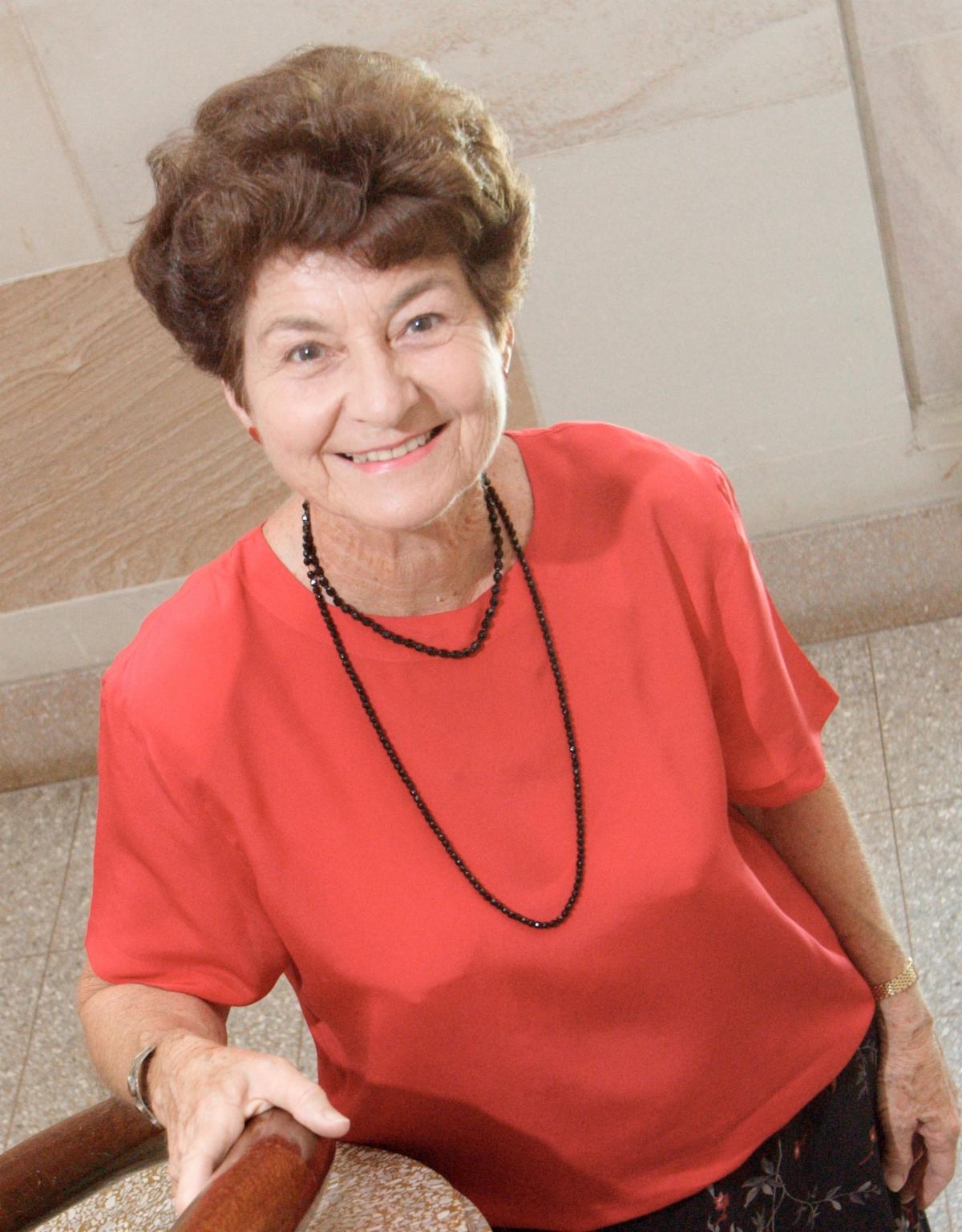
The IEA Community was saddened to hear about the passing of Margaret Bullock on 16 January 2026. Margaret was a long-term member of the Human Factors and Ergonomics Society of Australia (HFESA) and served for many years as the HFESA representative on the IEA Council. She served two terms on the IEA’s Executive Committee (1991-1994 and 1994-1997) as Chair of the Education and Training Committee (now called the Professional Standards and Education Standing Committee), being the first woman to serve on the IEA’s Executive Committee. In this role Margaret produced the IEA’s first core competencies document in 1997. In recognition of her service to the international ergonomics community, Margaret was also elected as an IEA Fellow. Margaret was formerly a Professor of physiotherapy at the University of Queensland (the first professor in physiotherapy in Australia) and her loss will be felt particularly by our Australian colleagues. The IEA salutes her service and may she rest in peace.


8f5a25e3-006f-4e7f-97b0-c02c4a0386ea.jpg?rdr=true


WEBINARS 


Anticipating the Effects of Artificial Intelligence (AI) on Resilient Performance, Webinar series on Resilience Engineering, 30 April 2026, 14h00 UTC

This webinar will explore the intersection of Artificial Intelligence (AI) and Resilience Engineering (RE), showcasing how safety-critical industries are applying systems-based disciplines to guide the integration of AI into mission-critical functions. The webinar will highlight applications in healthcare, defense, and aviation, focusing on the challenges and opportunities of designing, developing, and assuring resilient performance in AI-infused systems.


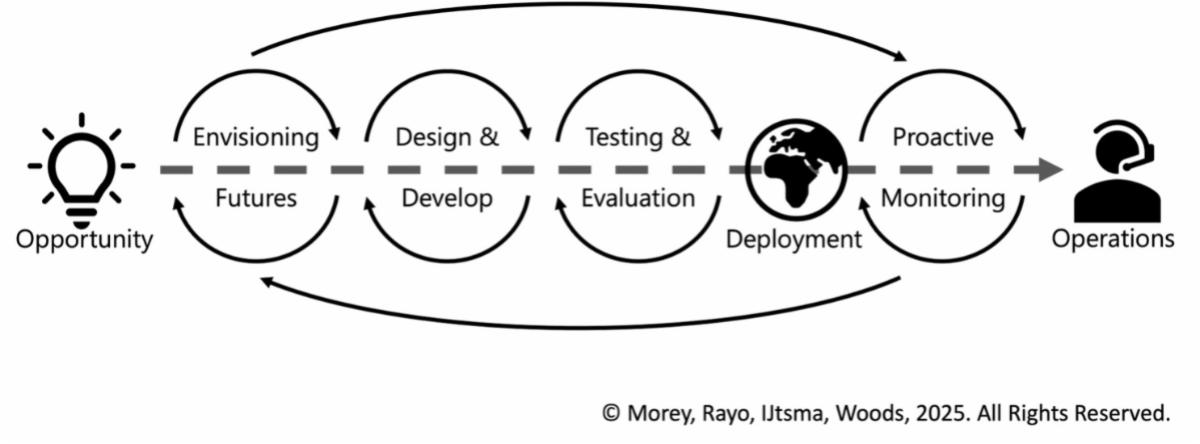
Artificial Intelligence (AI), Machine Learning (ML), and other forms of increasingly competent computation-based machine agents are being deployed to support mission-critical functions in safety-critical industries. The resilience engineering (RE) community has a wealth of foundational knowledge, including laws, theories and other patterns, that support and inhibit resilient performance. Even though the majority of the AI community in this second AI Gold Rush is either unaware or uninterested in applying that knowledge to their technology-based solutions, a number of safety-critical industries are actively exploring how to incorporate resilience engineering, cognitive systems engineering, human factors engineering, and other systems-based scientific disciplines for guidance on how to sustain system performance and realize the promised benefits of AI. This webinar will continue from previous IEA, REA, and RHCS webinars, briefly discussing the potential for Artificial Intelligence (AI) to both support and hobble resilient performance in high-consequence, safety-critical settings. It will showcase a number of techniques currently being used in safety-critical industries to guide the integration of AI into mission-critical functions. It will specifically highlight recent progress in Joint Activity Design heuristics, Joint Activity Testing, and the more nascent Joint Activity Monitoring. The webinar will highlight applications in healthcare, defense, and aviation, focusing on the challenges and opportunities of designing, developing, and assuring resilient performance in AI-infused systems.


08a010bb-1014-4da1-8aa1-2dca2100ca8d.jpg?rdr=true


Zoom Registration link:

https://us02web.zoom.us/webinar/register/WN_bttMWZiUQhS-lHg-Hq3BoQ


Past recorded IEA webinars can be found here:

https://www.youtube.com/channel/UCDnjCjRcYB7rBR2PJFw6k6w


UPCOMING EVENTS


The 15th International Symposium on Human Factors/Ergonomics in Organizational Design and Management (ODAM), 8 – 10 June, 2026, University of Connecticut 

The 15th International Symposium on Human Factors/Ergonomics in Organizational Design and Management (ODAM), sponsored by the IEA Organizational Design and Management Technical Committee and the HFES Macroergonomics Technical Group, will take place from 8 – 10 June 2026, at the University of Connecticut, Storrs campus. The conference theme is "Innovating for the Future: Human-Centered Organizational Design in the Age of Emerging Technologies and Evolving Work." ODAM 2026 is breaking boundaries with a two-campus global experience: We’re reimagining what it means to host a truly global symposium. ODAM 2026 will feature an innovative two-campus format, (University of Connecticut and Technical University of Denmark), bringing participants together in person. A Special Issue of Ergonomics is being planned. Full proceeding papers will be considered for submitting a manuscript for the special issue in Ergonomics.


For more information, please see the conference website: https://uconnuecs.cventevents.com/event/0b6e69d6-52c9-4a73-bf0c-86a7e4617973/summary


The Slips, Trips and Falls International Conference (STF2026), 18-19 June 2026, Huntsville, Alabama, USA

Mark your calendars and save the dates for this conference on slips, trips and falls taking place in Huntsville, Alabama in June 2026.


For more information, please visit the conference website: https://w3.tohoku.ac.jp/stftc/category/news/


The 10th International Digital Human Modelling Symposium, 1-3 July 2026, Maribor, Slovenia

The International Digital Human Modelling Symposium organised by the Faculty of Mechanical Engineering at the University of Maribor will be taking place from the 1st to the 3rd of July 2026 at the University of Maribor in Slovenia. 


For more information, please visit the conference website: https://dhm2026.fs.um.si/


11th International Ergonomics Conference, Ergonomics 2026, 1-3 October 2026, Dubrovnik, Croatia

The 11th International Ergonomics Conference – Ergonomics 2026 will take place from 1st – 3rd October 2026 in Dubrovnik, Croatia, at the Dormitorij venue. The conference is organized by the Croatian Ergonomics Society and will bring together researchers and professionals in ergonomics from around the world to exchange knowledge, present scientific findings, and discuss contemporary challenges in human-centred design and work systems. Through its mission of promoting ergonomic practice, education, and research, as well as strengthening international cooperation within the global ergonomics community, the conference aims to encourage interdisciplinary dialogue and support the development of safer, healthier, and more sustainable working and living environments. More information is available at the Croatian Ergonomics Society website: https://h-e-d.hr/conferences/


Submission deadline for abstracts: 30 June 2026


Conference fees:

Early bird before 15th July 2026: 600,00 €

Full amount: 700,00 €

Student's paper: 400,00 €


Nordic Human Factors and Ergonomics Society (NES) 21-23 October 2026 in Jönköping, Sweden

This conference’s theme is “Revitalizing Nordic Ergonomics for the Future”.


Key dates are:


  • Deadline for submissions: 30 April 2026
  • Notification of review outcome: 29 May 2026
  • Deadline for revised submissions: 30 June 2026


For more information, please visit the conference website: https://nes2026.org


Humanizing Work and Work Environments 2026 (HWWE 2026) of ISE, 9-11 December 2026, Dehradun, Uttarakhand, India

HWWE 2026 will be hosted by the University of Petroleum and Energy Studies (UPES) in Dehradun, Uttarakhand, India. The annual conference of the Indian Society of Ergonomics, envisions a future where work environments are designed to maximize well-being, safety, and efficiency. The conference aims to serve as a catalyst for transformative ideas, fostering a world in which ergonomics is seamlessly integrated with emerging technologies and sustainable practices. For more information visit: https://www.ise.org.in/hwwe.shtml


SPOTLIGHT ON IEA TECHNICAL COMMITTEES (TC)


After featuring the Human System Integration TC in our previous issue, in this edition, we turn our focus to the AI and Work Technical Committee.


The AI and work TC is a newly developed TC that aims to advance human-centered, safe, ethical, equitable, and effective integration of artificial intelligence in work systems by promoting ergonomics research, practice, education, and evidence-based guidance. The AI and Work TC champions worker safety, well-being, autonomy, and occupational justice in AI-enabled workplaces across sectors by bridging ergonomics expertise with AI developers, employers, labor, regulators and interdisciplinary partners.


Principles of the AI and Work Technical Committee

  • Human-centeredness: prioritise safety, health, dignity, and agency of workers
  • Evidence-driven: ground guidance in rigorous and transparent methods
  • Interdisciplinarity: integrate technical, social, and regulatory perspectives
  • Equity and inclusivity: assess and mitigate disparate impacts
  • Ethics: responsibility for human rights
  • Transparency and accountability: promote explainability, auditability and worker recourse


If you wish to join the Technical Committee Please Click On This Link


TECHNICAL COMMITTEES (TCs):


The IEA’s Technical Committees (TCs) are ad-hoc special interest groups that are formed as a platform to exchange up-to-date information on and discuss a particular HFE field. More information is available at: https://iea.cc/leadership/technical-committees/


TC Creation

Reminder: If you, with at least 5 colleagues, share a passion for a particular special interest area which does not exist as a Technical Committee (TC) and you wish to create a new TC, please contact stpchair@ iea.cc for formalizing this. The process is easy and free!


TECHNICAL COMMITTEES (TCs) SIGN UP SHEET


The IEA Technical Committees (TCs) are seeking to expand their membership and invite new members from federated societies. To facilitate this, we have created a sign-up form that provides an overview of the role of Technical Committees, including their four primary functions. By completing the form, you can express your interest in joining up to two TCs. Once submitted, TC administrators will review your submission and reach out for further details.

Sign-up form for Technical Committees: https://forms.gle/mMpZ9V9PhBGHPBHQ6


Joining a TC is free and there are no qualifying criteria (just that you are a member of a federated society) to join and to participate. You can also join more than one TC if your interests are broader. A list of the TCs can be found on the IEA’s website: 

https://iea.cc/leadership/technical-committees/.


You are always welcome to reach out to TC chairs in addition.


0ae00071-e767-4ed5-a41f-c3445638d7b9.png?rdr=true


S.gif


(사)대한인간공학회사업자등록번호 : 209-82-04628대표자 : 정홍인 (06132) 서울특별시 강남구 테헤란로 25길 20, 614호 (역삼동, 역삼현대벤쳐텔) Tel. 02-568-2995Fax. 02-6455-2994Email. admin@esk.or.kr

© The Human Factors & Ergonomics Society of Korea (ESK). All right reserved

-Ergonomics Society of Korea 상단으로
이용약관대한인간공학회 회원가입 약관
확인
개인정보 처리방침개인정보 처리방침
확인
이메일 무단 수집거부이메일 무단수집 거부
확인